
Together, we build a European Exposure Science Strategy
 1st Prize: (PDF, 1.48 MB)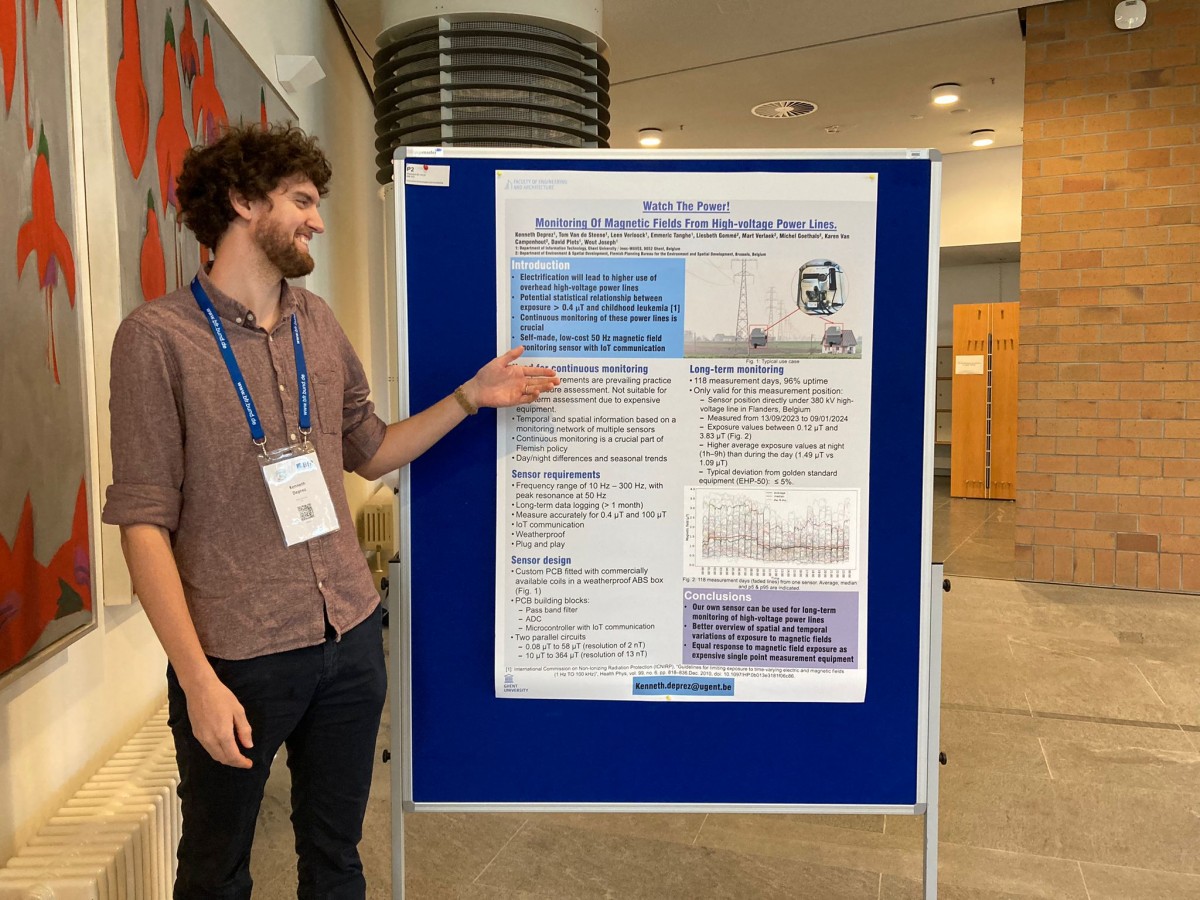
Kenneth Deprez received the M.Sc. degree in electronics and information and communication technologies (ICT) engineering technology from Ghent University, Ghent,
Belgium and is currently pursuing the Ph.D. degree with the Wireless, Acoustic, Environment and Expert Systems (WAVES) Group, Department of Information Technology.”
We designed a novel sensor that can measure 50 Hz magnetic fields. The sensor is needed to accurately quantify the long-term magnetic exposure in the vicinity of high voltage power lines. The sensor can measure both low fields, around 0.4 uT, for which a possible statistical relationship to long-term exposure and health effects is found and, high fields, 100 uT and 200 uT, which correspond to reference levels set by EU and scientific community. Such a sensor was tested for about 4 months, in which it had a high uptime of 96% and a typical deviation of less then 5% with regard to the baseline.
2nd Prize: (PDF, 1.05 MB)
Bianca Gomes, is a PhD student in Sustainability. She completed her master's degree in Human Biology and Environment in 2021 with distinction. Bianca is a researcher at two Portuguese Research Centers and has participated in national and international projects on microorganisms, air quality, food safety, and resistant mycobiota. Currently, as a PhD student, her research focuses on describing microbial exposure in poultry environment from a One Health perspective, with the aim of extending the study to different areas such as microbiology, global health, epidemiology and sustainability.
3rd Prize: (PDF, 519.68 KB)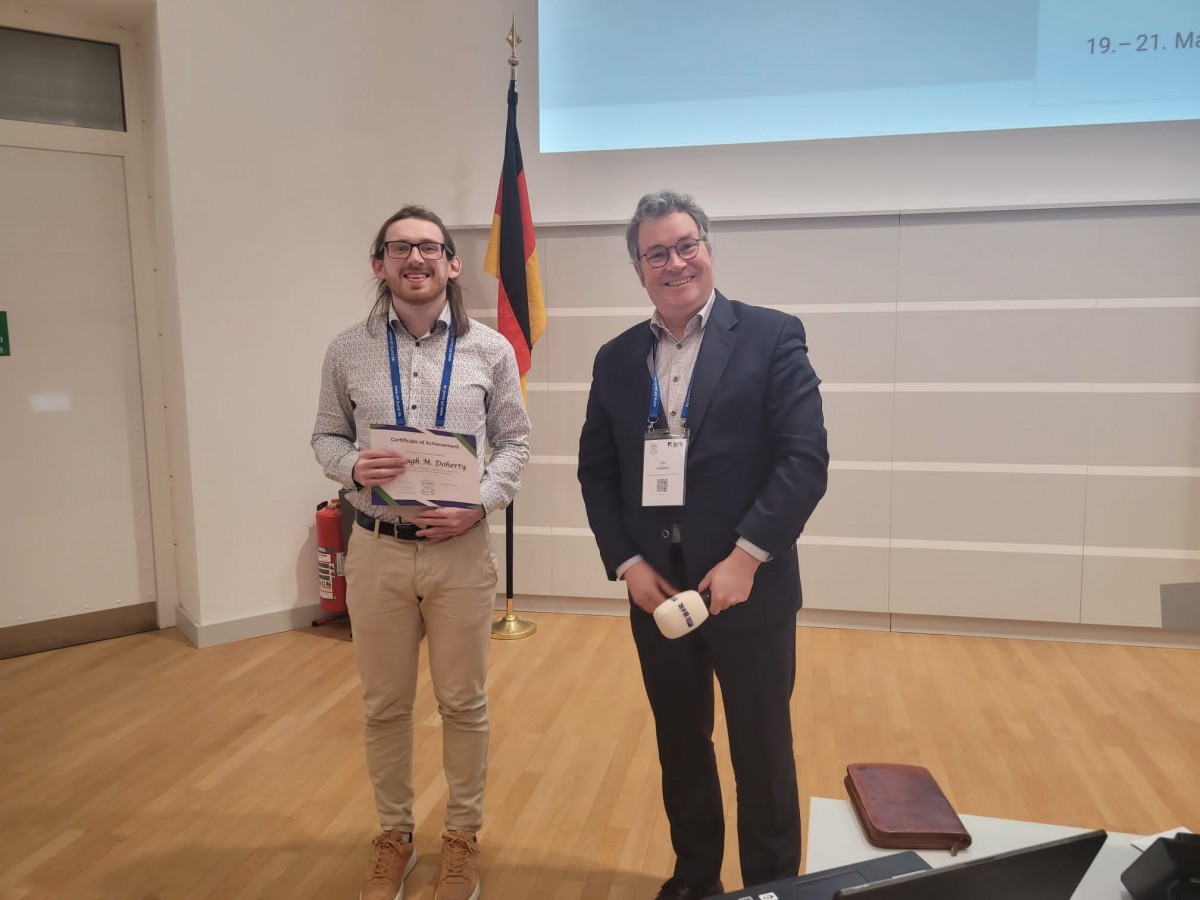
Darragh Doherty is a PhD student working in the Conway Institute at University College Dublin. Darragh graduated from the University of Galway in 2022 with a BSc in Biomedical Science, specialising in pharmacology. His research focuses on conducting environmental and occupational human biomonitoring studies of pesticides in Ireland. Overview of poster Neonicotinoid insecticides and neonicotinoid-like insecticides (NNIs) are the most widely used insecticides worldwide, accounting for nearly a quarter of the insecticide market in 2018. In recent years, NNIs have gained notoriety due to their adverse effects on pollinators, resulting in many restrictions of NNIs in the European Union. Despite growing concern about the hazardous properties of NNIs, there is a dearth of large-scale studies of human exposure to NNIs in the European Union. The EIRE ‘nEonicotinoid Insecticide exposuREs’ project aims to characterise exposures to NNIs among the Irish population using a human biomonitoring strategy. Between 2019 and 2020, 227 first-morning void urine samples were collected from members of 14 farm families and 54 non-farm families to assess glyphosate exposures in Ireland. In 2023, these urine samples were reanalysed for seven major NNIs (imidacloprid, acetamiprid, thiacloprid, thiamethoxam, clothianidin, flupyradifurone, and sulfoxaflor) and nine of their metabolites using a previously validated method involving liquid chromatography–mass spectrometry coupled to online solid-phase extraction. The EIRE project has indicated widespread exposure to NNIs among the general Irish population, with 76% of the study population exposed to at least one NNI. However all exposures were less than 0.1% of the Acceptable Daily Intake (ADI), indicating that the Irish population are protected at current exposure levels. This study represents the first time quantifying flupyradifurone in an EU population, likely because flupyradifurone was only approved for use in 2015.